
Key takeaways:
Most safety programs assume someone can see the work being done. A supervisor walks the floor, spots a frayed cord, and gets it fixed before lunch. That attention to detail gets much harder when your employees start each day at a different address.
Home health aides, delivery drivers, janitorial crews, inspectors, and field technicians often work alone, at sites you’ve never seen, with no supervisor nearby. The hazards change from stop to stop – and so does the way an injury is reported, investigated, and managed.
The employers who handle this well build safety into the communication that already happens every day, so safety goes wherever the job does.
On this episode of the WorkSAFE Podcast, we talked with Sheila Schmidt, Senior Manager of Safety and Risk Services at MEM. Schmidt and her team work with MEM policyholders on their safety programs and have a close-up view of what it takes to keep mobile employees safe in the field.
Variable job sites mean less control over hazards
At a fixed location, you control the building. You can see a hazard, touch it, and fix it, often the same day. Field employees work in customers’ homes and businesses, along roads, and in places you can’t find on a map.
With less physical control, more depends on your safety culture. Schmidt said employers need employees who can spot risks, make changes when needed, and work safely without someone standing right next to them.
That culture is harder to build when you rarely see your team in person. There’s no morning safety briefing in a circle before the day starts. Group texts, messaging apps, and virtual message boards help carry the message, but Schmidt was clear about their limits.
“The technology cannot be your safety plan,” she said.
The important thing is the message you send about safety and how you reinforce it: What you focus on, what you reward, and how you celebrate good choices so each employee stays connected to the organization.
Keeping a spread-out team connected
For mobile teams, there are two key communication habits: Getting information back from the field and keeping track of the areas where your employees work.
Habit #1: Make it easy to share hazards from the field
An employee who finds something unsafe at a customer site may assume it’s a one-off situation that’s not worth reporting. Encourage them to share it anyway. Even when a team is spread apart, many employees run into the same situations. There are plenty of opportunities to learn from others’ experiences.
A few ways to get that information moving:
- Regular phone calls: One-on-one calls from the home office help you understand each employee’s workday.
- Ride-alongs and visits: When a supervisor or team member is in the area, in-person time still counts.
- Photos and video calls: An employee who encounters something unfamiliar can snap a picture, send it to a supervisor, and ask about next steps.
- Job apps you already use: If employees clock in or share job site photos using a certain app, explore using the same app to log hazards and near misses.
Documented site knowledge is crucial when someone else picks up the work. Schmidt explained: “If somebody picks up your route or your client on another day, do they know that there are three large dogs that need to be locked up? Do they know that the second step on the porch has been broken forever and always will be?”
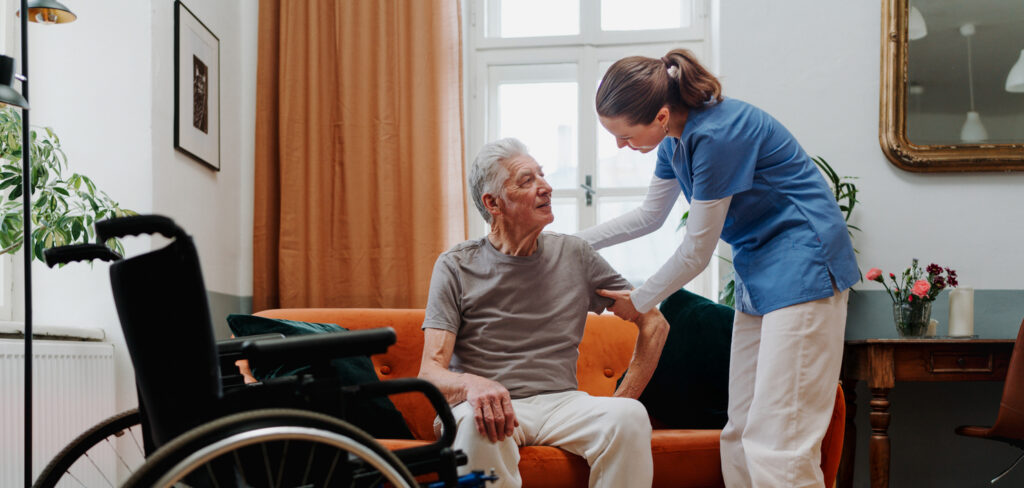
Feedback like this also gives you a chance to raise a problem with the customer before the next visit. Home health teams encounter many of these hazards in clients’ homes, creating unique challenges and opportunities for organizations’ safety cultures.
📍 Read next: Home Health Safety: Building Culture Beyond Compliance >
Habit #2: Know the area your employees are working in
Out of sight can easily become out of mind. If you manage employees from a distance, stay current on the risks they face every day:
- Weather: Employees may not get severe weather alerts on their own.
- Traffic: Major delays or closures can change a route or a schedule.
- Emergency care: Know the nearest urgent care or emergency room for each work area.
- Location: Have a way to find each employee, whether through their phone or an app, and to know when they’re done for the day.
Keep safety information where employees can reach it fast, and pair it with clear expectations. For example, tell employees that if a storm is moving through, they’re expected to pull over and wait for it to pass.
Driving and falls lead the injury list
Schmidt said the injuries she sees most often in mobile workforces are motor vehicle accidents and slips, trips, and falls. Both come from the same source: Getting to and moving around job sites you don’t control.
Driving is a major exposure for any team that spends the day on the road. “We can’t control all the other drivers out there, but we can definitely control our employee,” Schmidt said.
Make sure vehicles are in good condition, and employees are paying attention behind the wheel. In-vehicle cameras and driving behavior apps record hard starts, stops, and braking, which supports coaching drivers remotely. A written driving policy sets the baseline.
📍 View: 4 Must-Have Safe Driving Policies for Every Business >
Slips and trips are challenging to prevent because the walking surface changes at every stop. Even getting in and out of a vehicle many times a day strains the body, especially when an employee steps out with full arms and no hand free to catch themselves. Teach employees to identify common slip and trip risks, and remind them to use three points of contact when getting in and out of any vehicle.
📍 View: 6 Slip, Trip and Fall Resources That Reduce Workplace Risk >
End-of-day check-ins make reporting routine
Small injuries are easy to leave unreported when no supervisor is around, and Schmidt said she does see that gap with field employees. One fix she’s seen work is an end-of-shift check-in by phone, log, or app when the employee leaves the last stop or gets home safely. It covers:
- Confirmation that the day’s work is done
- Problems at a customer site that need attention
- What went well
- How the employee is doing
That last question brings out the small stuff, like a shoulder tweaked that morning. Now it’s documented, and the supervisor can follow up on whether it needs treatment. If you set daily assignments, someone who’s sore on Monday may need a different site on Tuesday.
Plan for an injury that happens miles away
Schmidt’s guidance to employers is to encourage employees to report an injury right away, and have an injury management plan in place. That plan includes getting the injured worker medical care and documenting what happened while it’s still fresh.
Decide how the employee gets care
An injured worker may want to go to their own doctor or clinic. There are several questions you need to answer before they do that:
- What level of care do they need at that moment? MEM’s 24/7 Work Injury Line lets policyholders and injured workers triage with a nurse to determine next steps.
- Is it safe for the injured worker to drive themselves?
- Will a supervisor meet them there? Who will drive their company vehicle back?
The laws regarding an employer’s ability to direct medical care vary by state, so it’s important to understand the laws that apply to your business and have a plan before you have an injured worker on the line asking what to do.
⏬ Download: Claims Management Kit (English + Spanish) >
Assign the incident investigation
When someone working alone gets hurt, getting them care comes first. That often leaves no one to photograph the scene, find witnesses, or document what led up to the injury. Without those details, it’s harder to keep the same thing from happening at another site. Decide in advance who will handle the investigation once the employee receives care.
⏬ Download: Incident Investigation Report (English & Spanish) >
Light duty looks different for mobile employees
In a facility, it’s easier to picture transitional work for an injured worker. For an employee whose job is on the road, transitional duty looks different – but it’s still on the table. Schmidt said your claims rep can work with you to find options. If you don’t have fitting transitional duty in-house, MEM partners with an organization that places injured workers in transitional duty at a nonprofit, so they earn a paycheck for meaningful work while they recover.
Going from new locations every day to performing repetitive tasks in one place can be a tough transition for mobile employees. “These are our doers. They are busy all day, every day, working on their own,” Schmidt said.
Losing that independence is frustrating. And while a light duty assignment might not be as exciting as their permanent role, sitting at home can be worse. Light duty keeps them working and connected.
There’s a payoff for employers, too: The sooner an injured worker returns on light duty, the less lost time on the claim, which limits its long-term impact on your experience mod and premium.
📍 Read next: Light Duty Options for a Successful Return to Work >
Start small and stay intentional
Keeping up with employees spread across many locations is a big task, but Schmidt said the effort pays off. Start small: Make improvements where you can, pick up the phone when you can, and build from there.
She also suggested thinking beyond a safety plan to the culture you want for your mobile workforce, including how employees work with customers and stay connected to each other. Safety is part of that picture, and it gets easier once it’s built into the routine.
“Often what feels intimidating or overwhelming is if you just say, ‘How do I carry safety to my mobile workforce?’ That feels like a project. However, if you think, ‘How can I roll safety into my everyday tasks and my everyday touchpoints?’ That’s a whole lot easier to do,” Schmidt said.
Want to put your reporting and return to work expectations in writing? Read: 8 Must-Have Safety Policies and How to Enforce Them >
Frequently asked questions: Mobile workforce safety
What are the most common injuries for field employees?
Motor vehicle accidents and slips, trips, and falls are the most common causes of injury among mobile workforces. Both come from traveling to and moving around job sites the employer doesn’t control. Getting in and out of a vehicle many times a day also adds strain, especially when an employee’s hands are full.
How do you keep employees safe when you can’t supervise them in person?
Build safety into the communication that already happens every workday. Regular phone calls, ride-alongs, photo sharing, and job apps help employees report hazards and learn from each other. Supervisors should also track weather, traffic, and the nearest emergency care for each work area, and have a way to locate each employee.
How do you get remote employees to report minor injuries?
Make reporting part of an end-of-day check-in. When employees finish their last stop, a quick call, log entry, or app update can confirm the work is done, flag site problems, and ask how they’re doing. That last question often brings out minor injuries, such as a sore shoulder, so supervisors can follow up before they worsen.
Who should investigate an injury when the employee works alone?
Assign the investigation in advance. When a lone employee gets hurt, getting care comes first, which can leave no one to photograph the scene, find witnesses, or document what happened. Naming who will handle those steps in advance keeps important details from getting lost.
What does light duty look like for field employees?
Light duty for a mobile employee often means a temporary, more stationary assignment while they recover. Your claims rep can help identify options. MEM policyholders without fitting transitional duty in-house can use MEM’s partner program, which places injured workers in transitional duty at a nonprofit.