
Winter brings unique workplace hazards that require proactive planning and awareness. From icy parking lots to indoor heating risks, cold weather poses safety challenges for everyone from maintenance staff to office employees. The National Safety Council reports that slips, trips, and falls typically result in around 14 days away from work. Winter weather significantly increases this risk. Ice and snow-related incidents account for one-third of all slip, trip, and fall injuries during cold months.
Need a quick visual reminder to share these winter safety tips with your team? Download now: Winter Weather Safety Checklist >
6 essential winter safety practices for all employees
Whether you’re managing a school, warehouse, or office building, these practical tips will help you create a safer workplace this winter season.
1. Wear slip-resistant winter boots
Winter footwear isn’t just about staying warm – it’s about staying upright. Standard work shoes or dress shoes often lack the traction needed for icy parking lots and snow-covered sidewalks.
What to look for in winter work boots:
- Deep tread patterns that channel water and slush
- Rubber soles (better traction than leather or plastic)
- Insulation appropriate for outdoor temperatures in your region
- Water resistance to keep feet dry in slushy conditions
When one MEM policyholder analyzed their slip and fall incidents, they found that footwear played a significant role. “We found that people were not wearing the right type of shoes for slick days or rainy days or whatever else,” explained Zac Rantz, safety coordinator for Nixa Public Schools. “So, we started adding little reminders like, ‘Don’t forget to wear the right kind of shoes. It could be slick today.’”
Simple reminders before weather events can prevent slip injuries. Consider sending text alerts or emails when conditions are icy and keep extra traction devices (like slip-on ice cleats) available for employees who need them.
⏬ Download: Proper Footwear Guidelines Poster >
2. Watch for icy patches and wet floors
Even with great boots, awareness matters. The most dangerous ice is often invisible – black ice forms when temperatures hover around freezing, and precipitation creates a thin, transparent layer on pavement.
High-risk zones to watch:
- Building entrances where foot traffic melts and refreezes snow
- Shaded areas that don’t get direct sunlight
- Low spots or drainage areas where water pools
- Indoor entryways where snow and ice melt off boots
When walking on potentially icy surfaces, take shorter steps and walk flat-footed rather than heel-to-toe. Keep your hands free (not in pockets) to maintain balance.
⏬ Download: Winter Slips and Trips Prevention Toolbox Talk >
3. Be aware of slippery salt and sand buildup
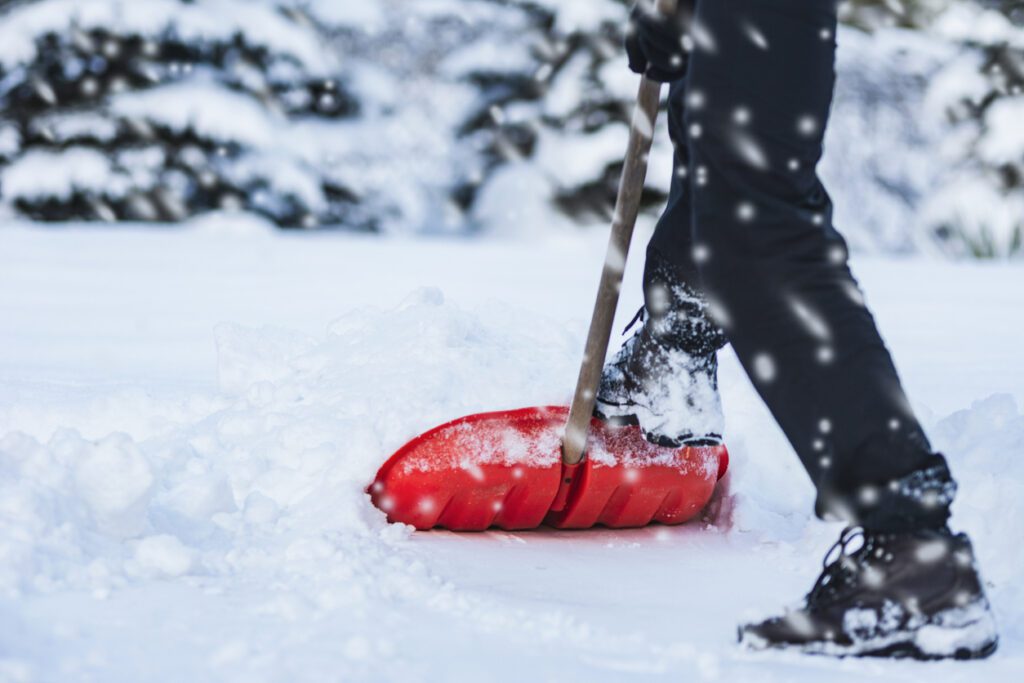
Salt and sand prevent slips outside – but create hazards inside. As these materials get tracked into buildings on boots, they create surprisingly slick surfaces on tile and hard floors, especially when wet.
Managing indoor winter hazards:
- Place absorbent mats at all entrances (and replace when saturated)
- Increase floor cleaning frequency in high-traffic areas during winter
- Post signage when floors are being cleaned or are wet
- Create designated “snow removal zones” near entrances where employees can brush off boots
The transition from outdoor cold to indoor heat also creates condensation on floors. This combination of moisture, salt, and tracked-in debris makes entryways particularly hazardous during the winter months.
📍 Read next: Floor Safety: Reduce Slip, Trip, and Fall Risks in Your Business >
4. Dress in insulated layers when working outside
Hypothermia and frostbite aren’t just risks for extreme outdoor employees – they can affect anyone spending extended time outside, including parking lot attendants, maintenance crews, delivery drivers, and employees clearing sidewalks.
Layering is the most effective approach to cold weather clothing:
- Base layer: Moisture-wicking material to keep skin dry
- Insulating layer: Fleece or down to trap body heat
- Outer layer: Waterproof, windproof jacket to protect from the elements
Don’t forget extremities: insulated gloves, warm socks, and hats that cover ears are essential. Watch for early signs of cold stress: shivering, numbness, confusion, or fumbling hands. Create a schedule for regular warm-up breaks when temperatures drop below freezing.
📍 Read next: Winter Wearables: 6 Essentials Recommended by a Safety Professional >
5. Allow extra stopping distances for vehicles in snow
Whether you’re driving a bus, making deliveries, or traveling between locations, winter driving requires significant adjustments. Snow and ice can dramatically increase stopping distances compared to dry pavement.
Safe winter driving practices:
- Reduce speed to well below posted limits during winter weather
- Increase following distance to at least 8-10 seconds
- Accelerate and brake gradually to maintain traction
- Keep headlights on for better visibility
Even if you’re comfortable driving in snow, remember that others may not be. Defensive driving becomes even more critical in winter conditions.
⏬ Download: Safe Driving Toolbox Talk >
6. Keep space heaters 3+ feet from flammable materials
When temperatures drop, space heaters appear in offices, break rooms, and work areas. While they provide welcome warmth, space heaters are a leading cause of workplace fires.
Space heater safety rules:
- Maintain at least 3 feet of clearance from anything that can burn
- Plug directly into wall outlets, never into extension cords or power strips
- Never leave a running space heater unattended
- Only use heaters with automatic shut-off features if tipped over
If your workspace feels uncomfortably cold, report it to facilities management rather than relying on a personal space heater.
Want to share these tips with your employees? Download the checklist to email, print, or hang it in the breakroom: Winter Weather Safety Checklist >
Bonus steps for administrators and facilities managers
Beyond individual safety practices, effective winter preparedness requires operational planning. Here are two additional considerations for administrators:
7. Clear snow strategically to avoid creating hazards
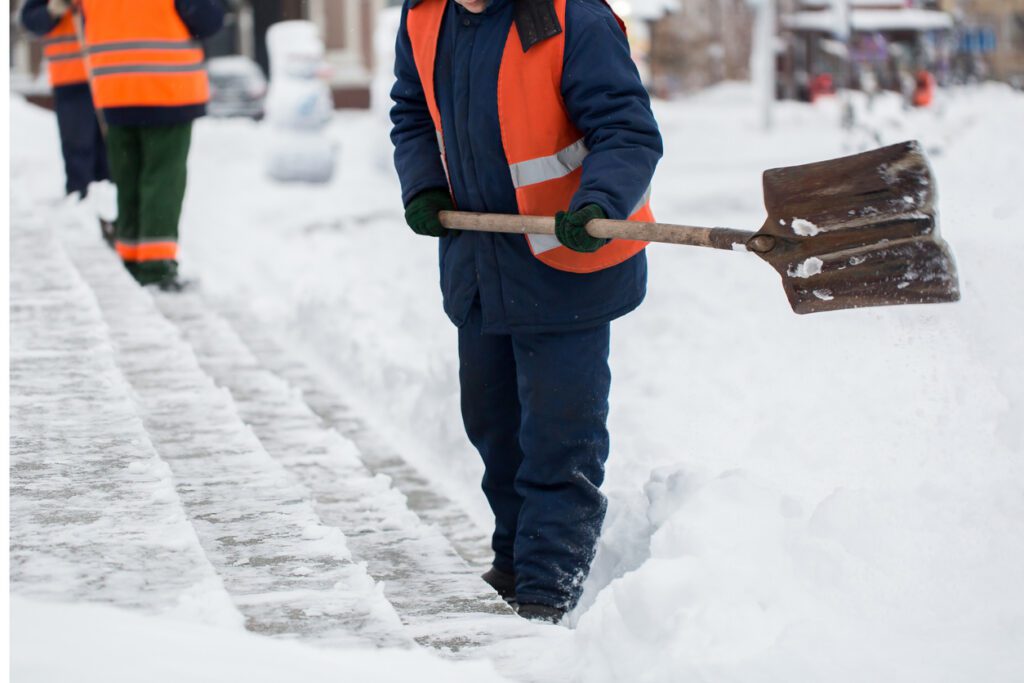
Reactive snow removal – waiting until after accumulation to start clearing – leaves employees exposed to slip hazards during the most critical time: their arrival at work. Planning ahead makes the difference between preventable injuries and a safe workplace.
Tips for an effective snow removal plan:
- Pre-treat parking lots and walkways before precipitation begins (when temperatures allow)
- Ensure equipment is functional before winter and stock salt/sand
- Identify priority areas: main entrances, handicap parking, emergency exits
- Begin clearing during heavy snowfall (don’t wait until it stops)
- Salt or sand immediately after plowing while surfaces are still clear
- Designate specific cleared entrances if only some are ready
⏬ Download: Winter Weather Safety Toolbox Talk >
8. Schedule early snow removal and pre-treatment
Even the best snow removal plan fails if employees arrive before clearing is complete. Schools and businesses with early morning operations face challenges when overnight snow creates hazardous conditions by opening time.
Managing early-arrival snow hazards:
- Establish clear communication systems (text alerts, email, automated phone calls)
- Delay building access until clearing is complete when needed
- Notify employees if building access will be delayed for clearing
- Schedule early crew arrival for expected light snow
- Create accountability: Who decides to delay? Who communicates? By what time?
- Document your protocol so it’s ready to execute quickly when needed
📍 Read next: Winter Safety: Preparing Your Workforce for Winter Weather >
Build a comprehensive winter safety program
An injury-free winter requires awareness, consistent practices, and proper planning. Whether you’re training frontline staff or developing comprehensive policies for your organization, these guidelines provide a foundation for keeping everyone safe throughout the winter months.
Need help building a comprehensive workplace safety program? MEM’s safety consultants work with businesses and schools across the region to identify hazards, develop safety policies, and train employees. Contact your MEM safety consultant to schedule a consultation.