
Updated: March 20, 2026
Key takeaways:
Finding and hiring a great new employee is worth celebrating. But once a new employee walks through your door, the real work starts – and so does the risk. According to MEM data, new hires account for 36% of work comp claims despite making up 22% of the workforce. That gap doesn’t close on its own. It closes when employers weave safety into the entire onboarding process.
The good news is that effective safety onboarding programs don’t require elaborate infrastructure. They require intention – a clear plan for what new employees need to know, who will teach them, and when.
Step zero: Hire the right person
Everything that follows in this guide gets easier (or harder) based on who you hire. A candidate who lacks the physical capability for the role, has a history of safety incidents, or is resistant to feedback is less likely to become a safe employee, regardless of onboarding.
Before the first day, invest in a hiring process that screens for safety fit:
- Structured interviews with situational questions about past safety behavior
- Thorough background checks
- Reference calls that probe work ethic and coachability
- Post-offer employment testing to confirm the candidate can safely perform the job
Your approach to hiring has a ripple effect – even for temporary employees.
We’ll walk you through the whole hiring process. Read How to Hire for Safety Fit: A 5-Step Checklist.
Before your new hire starts
Onboarding begins before a new hire ever shows up for their first shift. The period between offer acceptance and start date is an opportunity to set expectations, reduce first-day anxiety, and signal that safety is a priority from the start.
At minimum, send new employees the information they need to arrive prepared: Where to go, who to ask for, what to wear or bring, and a brief overview of what day one will look like. If your workplace has specific safety requirements – PPE, footwear, physical protocols – communicate those in advance, so new hires aren’t caught off guard.
This isn’t just a courtesy. It’s the first signal you send about how you operate.
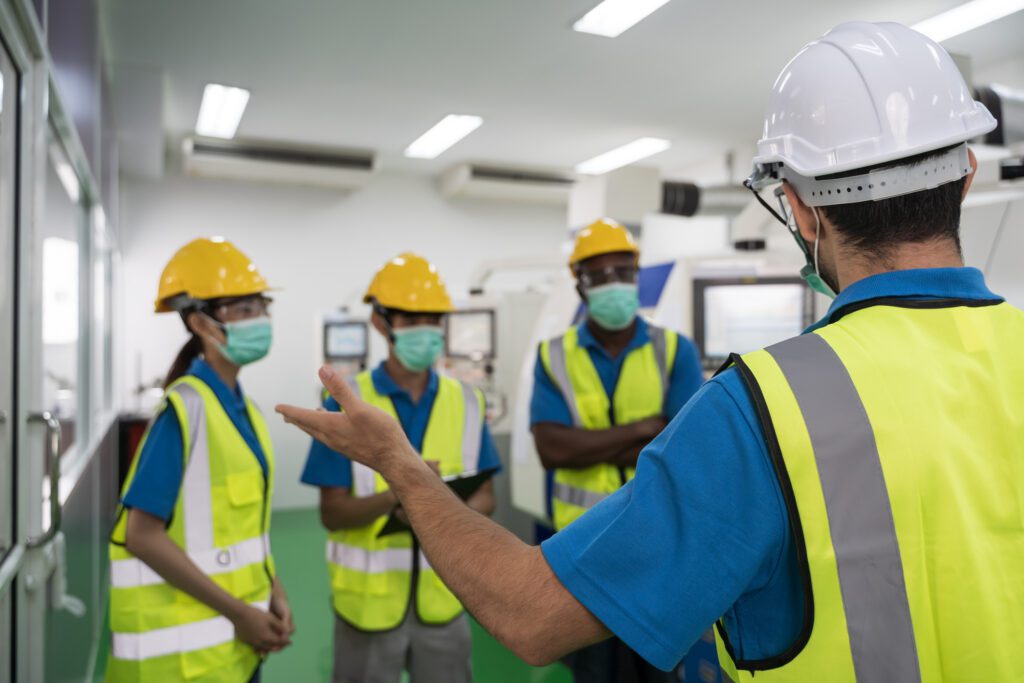
Day one: Safety orientation
The first day is the most important day of the onboarding process. What you cover – and how you cover it – shapes a new hire’s safety mindset for the long term.
“Our new hires don’t know what they don’t know,” explained Sheila Schmit, MEM Safety & Risk Services Manager. “That means we need to anticipate where problems may be, anticipate questions, and give them the comfort to ask any questions.”
A strong day-one safety orientation covers:
- Workplace hazards specific to your environment: Don’t assume new hires will recognize risks that experienced employees take for granted. Point out facility- and industry-specific hazards even if they seem obvious to you.
- Emergency procedures: Evacuation routes, first aid locations, and who to contact if something goes wrong
- Injury reporting: How to report an injury if one occurs, and why prompt reporting matters both for your employee’s care and your work comp claim management
- Your safety culture: What you expect, what you don’t tolerate, and why safety is a shared responsibility
What new employees experience on day one is what they’ll carry with them. “That ultimately is what they’re going to remember for a very long time,” said Aaron Paris, Director of Safety at the Robert E. Miller Group. “What did I learn? What was a priority when I came on? Was it just ‘here’s your name badge and go out on the floor?’ Did someone take a lot of time and invest in me?”
Don’t send a new hire to a job site or production floor without a supervisor escort on day one. Have an experienced team member walk them through the environment, point out hazards, and make introductions. That first walkthrough does more than orient them; it models the behavior you expect.
📍 Read next: New Hire Onboarding: Setting New Employees Up for Success >
The first 30 days: Training that sticks
The first month is when new hires absorb the most – and when they’re most vulnerable. Orientation gets them started, but structured training is what builds the skills and habits that keep them safe.
Effective training in the first 30 days should be:
- Job-specific, not generic: Focus on the actual tasks, equipment, and hazards your new hire will encounter.
- Hands-on wherever possible: Classroom instruction and digital modules have their place, but practice in a realistic environment is what builds muscle memory and confidence.
- Supervised, with room to ask questions: New hires won’t always know what questions to ask, so structured observation time with an experienced employee is essential.
How hands-on should training be? The more realistic, the better. Emmaus Homes, a disability support services provider and MEM policyholder, took this idea seriously enough to build a dedicated training lab that replicates client home environments. New Direct Support Professionals now practice with specialized equipment before working independently with clients. “The adaptive equipment lab is a great way to provide new hires with thorough, systematic training,” remarked Andrew Grosch, Senior Safety and Risk Consultant at MEM.
Most businesses won’t build a simulation lab – and they don’t need to. The principle is what matters: Give new employees a chance to practice before the stakes are high.
By the end of the first 30 days, a supervisor should check in with each new hire to assess what they’ve learned, identify gaps, and address any concerns before they become habits.
Want tips for successful training? Revisit the basics: How to Lead a Safety Meeting | Free Safety Resource Library

Mentorship: The culture transfer
Training programs teach skills. Mentors transfer culture. And a strong onboarding program needs both.
A mentor – ideally an experienced employee on the same team or job site – gives a new hire someone to shadow, ask questions of, and learn from in real time. The value isn’t just technical knowledge. It’s the unwritten rules of your workplace: how your team communicates, how they respond to hazards, what “doing it right” actually looks like day to day.
Domini Montgomery, Safety Manager at the St. Louis Zoo, described the foundation that mentorship builds: “Safety mentorship sets the tone for a positive safety culture, where folks feel comfortable stepping up and asking questions and sharing ideas.” That psychological safety is especially critical for new hires finding their footing – employees who feel valued and heard are far more likely to seek clarity before a mistake becomes an injury.
A few principles for an effective mentor program:
- Choose mentors deliberately: Experienced employees who model the behavior you want, not just whoever’s available
- Make the role explicit: Mentors should know what’s expected of them and have dedicated time to spend with new hires
- Create accountability: Pair the mentorship relationship with the 30/60/90 check-in structure so both mentor and new hire know progress will be reviewed
The payoff is compounding. When experienced employees take ownership of onboarding, safety culture becomes self-reinforcing rather than dependent on top-down enforcement.
📍 Read next: Safety Mentorship: How Relationships Strengthen Safety >
Days 30–90: Check-ins that matter
The 30/60/90-day framework isn’t a rigid curriculum. It’s a rhythm. Regular check-ins at each milestone give you a structured opportunity to assess progress, course-correct early, and reinforce what’s working.
| Milestone | Focus |
| 30 days | Skills check: Can they perform core job functions safely? What gaps remain? |
| 60 days | Behavior check: Are they following procedures independently? Any near misses or concerns? |
| 90 days | Culture check: Are they engaged? Do they ask questions, report hazards, and support teammates? |
These check-ins don’t need to be formal reviews. A 15-minute conversation between a supervisor and a new hire goes a long way – both for catching problems early and for signaling that you’re invested in their success.
💡 Pro tip: Document your check-ins, even informally. Notes on training completion, skills assessments, and conversations create a record that matters if a work comp claim arises later.

Beyond 90 days: Building on the foundation
Most workplace onboarding programs stop at 90 days. The best ones don’t. Safety training should continue beyond initial onboarding – through regular toolbox talks, refresher training, and ongoing reinforcement of the behaviors established in those first three months.
The investment case is straightforward. “If you spend this time upfront, you’re going to save it down the road,” explained Schmidt. “You’re going to save it in injuries and turnover and morale in the workplace. It is a time and effort investment upfront, but it will pay back in dividends.”
The employers who take new hire safety seriously from day one are the ones who see that return – in fewer claims, lower turnover, and a workplace where safety isn’t a rule to follow but a shared value.
Ready to put your new hire safety program into practice? Download the New Hire Safety Toolkit for a ready-to-use resource to support every stage of onboarding.
Frequently asked questions: New hire safety onboarding
New hires are unfamiliar with your specific environment, equipment, and hazards. Plus, they’re often reluctant to slow down or ask questions while they’re still proving themselves. That combination of inexperience and eagerness makes the first few months on the job the highest-risk period of employment. Structured onboarding, mentorship, and regular check-ins help close that gap before it becomes a claim.
At minimum, day-one orientation should cover the workplace hazards specific to your environment, emergency procedures, how to report an injury, and a clear picture of your safety culture and expectations. Don’t assume new hires will recognize risks that experienced employees take for granted. Walk them through the physical space with a supervisor or experienced team member before they work independently.
The formal onboarding process should last at least 90 days, with structured check-ins at 30, 60, and 90 days. But safety training shouldn’t stop there. Ongoing toolbox talks, refresher training when procedures or equipment change, and continued mentorship help reinforce the habits established during initial onboarding.
Training teaches skills – how to use equipment, follow procedures, and identify hazards. Mentorship transfers culture – the unwritten norms of how your team communicates, responds to problems, and approaches safety day to day. Both are necessary. A new hire who knows the procedures but doesn’t feel safe asking questions is still a safety risk.
Each milestone has a different focus. At 30 days, assess whether the new hire can perform core job functions safely and identify any skill gaps. At 60 days, evaluate whether they’re following procedures independently and flag any near misses or concerns. At 90 days, look at engagement – are they asking questions, reporting hazards, and supporting teammates? Document all check-ins, even informally, in case a work comp claim arises later.
Significantly. A candidate who lacks the physical capability for the role, has a history of safety incidents, or is resistant to feedback will be harder to onboard safely, regardless of your program. Pre-hire screening is one of the most effective ways to reduce work comp risk before day one.
Post-offer employment testing (POET) evaluates whether a new hire can safely perform the physical demands of their specific role before their start date. It establishes a documented baseline of physical capabilities that can be referenced if a work comp claim arises later. For physically demanding roles, it’s one of the most cost-effective pre-hire steps you can take.
Start small. Pilot the concept within your safety committee or an existing training program. Identify experienced employees who model the behavior you want and make the mentor role explicit with dedicated time and clear expectations. Leadership encouragement, not just permission, is what makes these programs take hold.