
When a workplace injury happens, it’s easy to chalk it up to the nature of the job. For warehouse teams doing physical, repetitive work, sprains and strains can start to feel inevitable. Etrailer didn’t accept that.
The Wentzville, Missouri-based e-commerce company watched sprain and strain claims become its largest loss category year after year. As the facility expanded to more than 300,000 square feet in early 2025, etrailer decided to address the problem head-on. They took a three-pronged approach:
- Training: Proactive ergonomics and body mechanics training for both new and veteran employees, focused on injury prevention rather than reaction
- Equipment: Introduction of stock chasers – powered vehicles that tow heavy carts rather than requiring employees to push them – with custom modifications including tow bars, mounted ladders for hard-to-reach picks, and tablet holders to keep operators’ hands free
- Facility design: Directional aisles, reduced cornering speeds, height and weight limits for top-shelf loads, and high-visibility stop signs and markings at every intersection to manage the increase in powered equipment safely
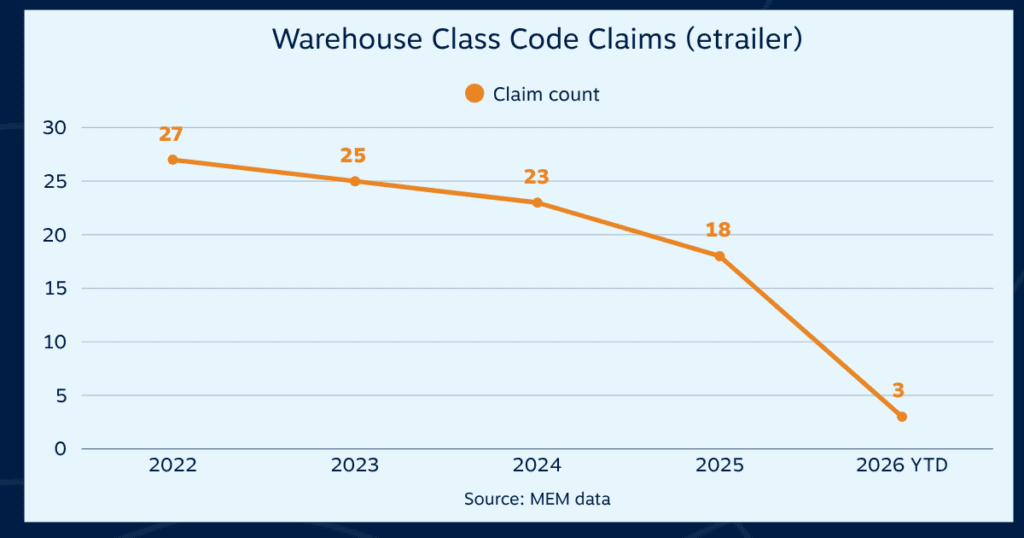
The results? Over a 4-year period, sprain and strain claims fell from 27 claims to 18 – a 33% reduction. Andrew Grosch, Senior Safety and Risk Consultant at MEM, has worked closely with the etrailer team throughout this process.
Etrailer didn’t wait for the claims to get worse before acting. They looked at the data, identified the root cause, and made a real investment in changing how the work gets done. The results speak for themselves.
Andrew Grosch, ASP, Senior Safety and Risk Consultant, MEM
Below, etrailer Safety Coordinator Takoda Jipp shares the story in his own words.
The world is always changing, and we have to change with it.
When our warehouse expansion went live, it nearly doubled our footprint to more than 300,000 square feet. We knew growth would demand more from our operation, but what we couldn’t allow was for it to demand more from our teammates physically.
For years, sprains and strains were our largest loss category. Our picking team regularly pushed carts weighing close to 1,000 pounds, often walking the equivalent of a half marathon in steps each shift. It was demanding work – and in a facility twice the size, it would only become more demanding.
We had a choice: accept it as part of the job or redesign the job itself.
We chose to redesign.
Building the foundation
In 2023, we strengthened our safety culture by implementing proactive training focused on proper lifting techniques and body mechanics for both new and veteran teammates. We wanted injury prevention to be intentional, not reactive.
That training helped reduce the severity of sprain and strain claims – but education alone wouldn’t solve the physical strain of pushing heavy loads across a much larger warehouse.
Rethinking the process
As our expansion came online in early 2025, we knew we couldn’t simply scale the same picking process into a footprint that had effectively doubled overnight. If teammates were already walking the equivalent of a half marathon each shift, more space would only increase fatigue and risk.
So, when the expansion went live, stock chasers were introduced at the same time. Growth and process redesign happened together.
Instead of pushing heavy carts across long distances, teammates could now tow them – dramatically reducing daily physical stress. Our in-house engineering team modified existing pick carts by adding tow bars, ensuring they could be safely pulled behind the stock chasers.
But we didn’t stop there.
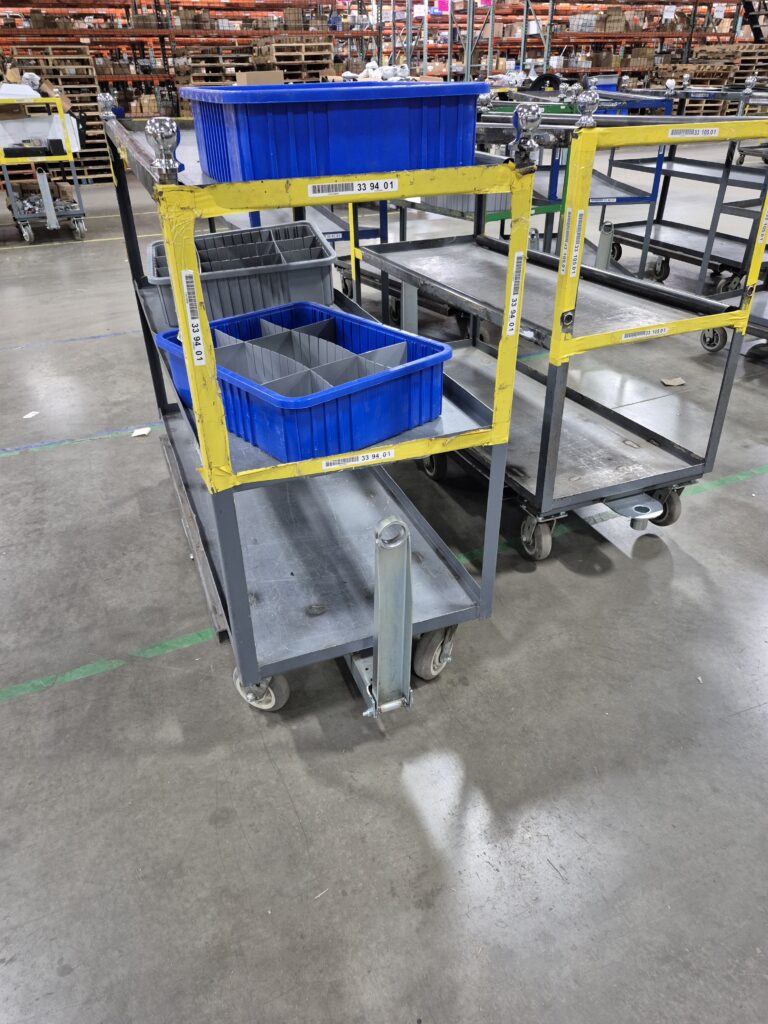
To address hard-to-reach picks, we mounted ladders directly to the back of the stock chasers, giving operators stable, consistent access without improvising or overreaching. We also added tablet holders to each unit so operators can keep both hands on the wheel at all times, improving control and eliminating the need to juggle devices while driving.
Introducing nearly three times the amount of powered equipment required thoughtful planning and strong safety controls.
We reduced cornering speeds, established height and weight limits for top-shelf loads and implemented directional aisles, so powered equipment now travels one way only. Stop signs and high-visibility markings were added at every intersection to improve predictability and reduce risk.
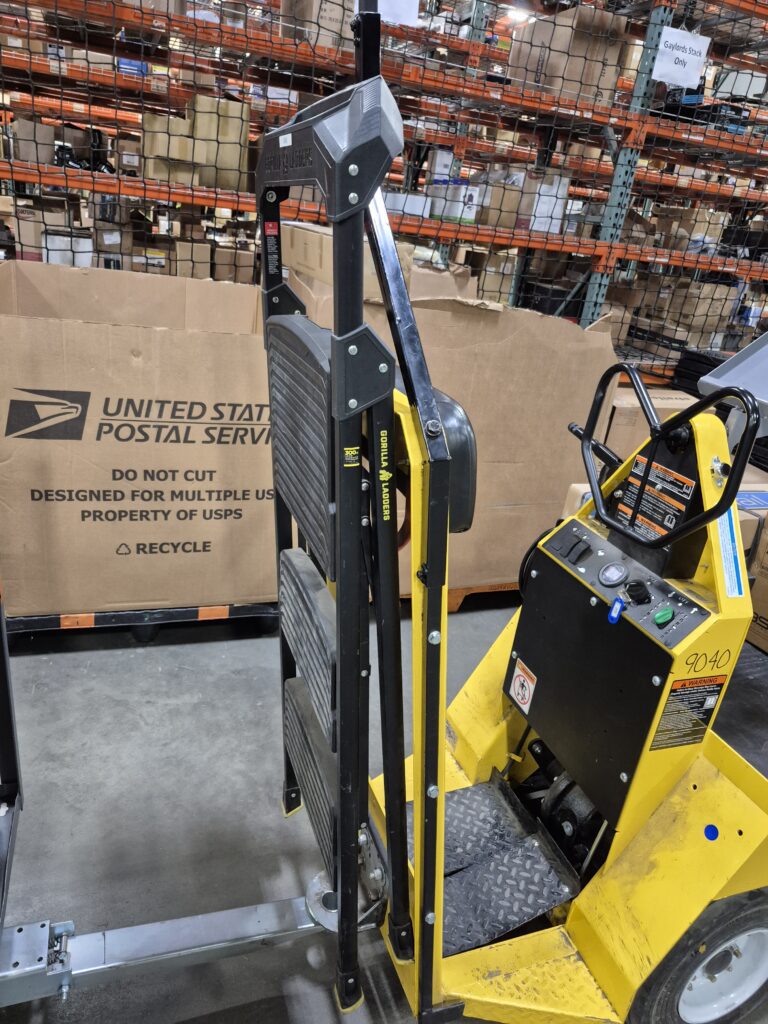
Operators must complete certification and specialized training before operating stock chasers. Near-miss and accident tracking were built into the rollout, allowing us to refine the process alongside teammate feedback.
The expansion didn’t just make our building larger – it pushed us to make our operation smarter.
The impact
The results have been meaningful. Between 2022 and 2025, our sprain and strain claim count dropped by 33% – from 27 claims to 18. So far in 2026, we’ve seen just 3. Fatigue has decreased, efficiency has increased, and sprains and strains are no longer defining our loss history.
Evolving with purpose
This initiative reflects a broader cultural shift. As warehouses expand and expectations rise, safety cannot remain static – it must evolve with the operation.
The world is always changing, and successful teams change with it. By combining proactive training, thoughtful engineering, controlled traffic flow, ergonomic improvements, and disciplined equipment certification, we created a safer, more sustainable future for our warehouse.
Etrailer funded these improvements on its own – and the results speak for themselves. MEM policyholders looking to make similar investments don’t have to go it alone. Apply for a safety grant to help fund equipment upgrades and safety initiatives. Learn more about the MEM Safety Grant program. >