
Key takeaways:
Groundskeeping employees face a wider range of hazards than most. In a single shift, they might operate heavy equipment, work in extreme heat, handle chemicals, and walk uneven terrain. Managing that exposure takes deliberate preparation: The right PPE, the right habits, and a culture where safety is part of the job.
Whether your grounds crews work at a municipality, property management company, school district, or large campus, these fundamentals apply.
Need to get these safety basics in front of your employees right away? Download our free Groundskeeping Safety Checklist >
Watch your footing on uneven terrain
Grounds crews spend their days on surfaces that are less than ideal – slopes, wet grass, loose gravel, root-exposed paths, and deteriorating pavement. Slips, trips, and falls are among the most common causes of injury in this work.
Train employees to slow down when surface conditions change and to report deteriorating paths before someone gets hurt. Treat walkway maintenance as a safety issue, not just a facilities issue.
📍 Read next: Slips, Trips, and Falls: Don’t Sweep Safety Risks Under the Rug >
Gear up: PPE for groundskeeping work
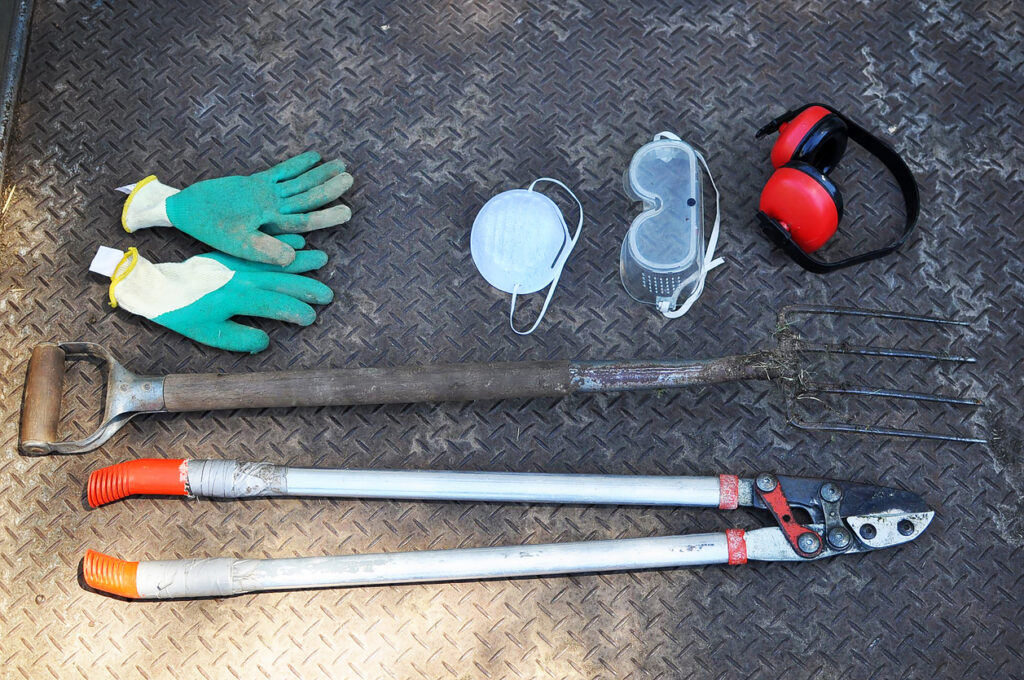
Groundskeeping involves a steady rotation of physical hazards, such as flying debris, loud equipment, chemical exposure, and sharp materials. The right PPE for each task is the baseline, but it only works if employees know what to wear and when.
- Footwear: Ankle-supportive boots with grip and toe protection are the right tool for these jobs, especially on slopes and uneven terrain.
- Eye protection: Mowing, trimming, and any task that generates flying debris requires eye protection. Eye injuries happen fast and are almost entirely preventable. Ensure that eye protection wraps around the side of the eye, not just the front.
- Hearing protection: Hearing damage from equipment noise is cumulative and irreversible. Employees who run mowers, trimmers, or other loud equipment need hearing protection every time – not just when it seems loud enough to matter.
- Gloves: Grounds crews handle debris, sharp materials, tools, and chemicals throughout the day. Match the glove to the specific hazard. A general work glove doesn’t provide adequate protection against chemical exposure. Cut-resistant gloves vary widely in their ratings.
Use equipment the way it was designed to be used
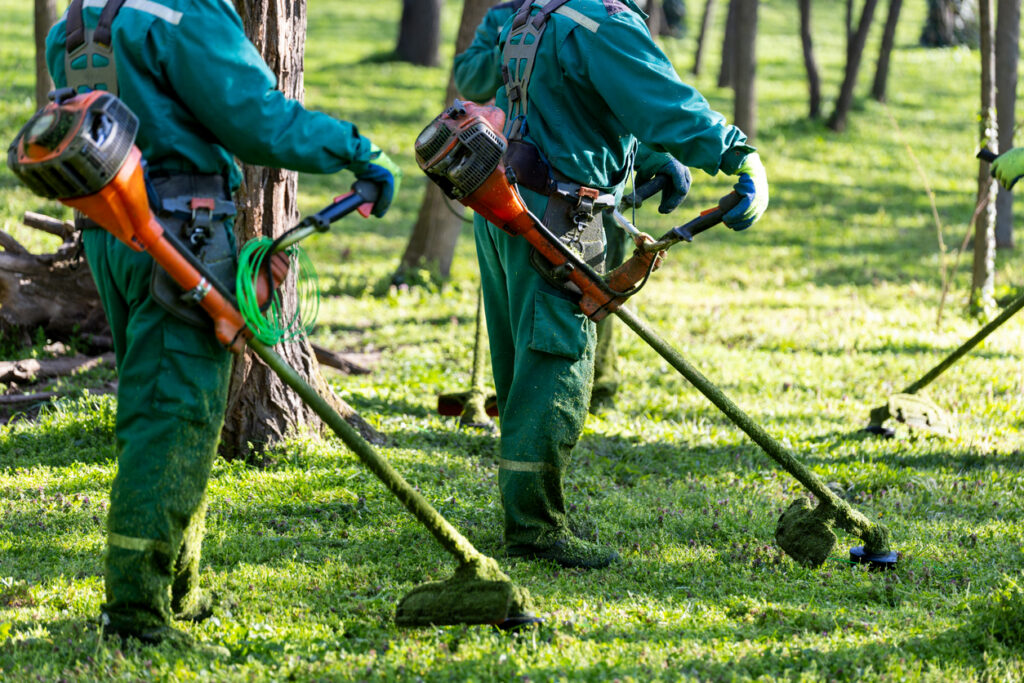
Mowers, UTVs, tractors, and other powered equipment are involved in some of the most serious groundskeeping injuries – rollovers, runovers, and falls from equipment that basic habits would have prevented.
Three practices make the biggest difference:
- Wear a seat belt in any vehicle or piece of equipment that has one, including mowers and UTVs with rollover protection systems.
- Use three points of contact (two hands and one foot, or two feet and one hand) every time an employee gets in or out of equipment. Jumping down is one of the most common causes of ankle and knee injuries in this work.
- Never ride in truck beds or jump from equipment. It’s a quick way for a routine task to become a serious injury.
⏬ Download: Groundskeeping Safety Toolbox Talk >
Take heat seriously – and put it in writing
Don’t let outdoor employees work through breaktime just because they feel fine. Schedules, task deadlines, and crew dynamics all create pressure to push through discomfort that, in hot conditions, can escalate quickly.
“When we’re in a non-occupational setting, we self-regulate pretty well when it comes to heat,” explained Rod Harvey, Director of Industrial Hygiene and Field Operations at RHP Risk Management. “Unfortunately, in occupational settings, sometimes people have goals that they have to achieve or a break schedule that is not amenable.”
A written heat management plan removes the decision from the individual. It should specify water access, required rest breaks, shade availability, and the signs of heat illness that all crew members are trained to recognize – in themselves and in coworkers.
📍 Read next: Heat Stress: The Hidden Hazard That Comes with Warming Weather >
Don’t overlook cold and wet conditions
Cold and wet conditions get less attention than heat, but they create real hazards.
Wet grass and frozen ground create significant slip risks. Surfaces that employees navigate without thinking in summer become unpredictable in fall and winter. Layering for insulation matters, but bulky clothing that restricts movement can create its own risks around equipment.
Include these details in your seasonal protocols:
- Treat walkways, sidewalks, and paths during winter precipitation before crews begin work, not after.
- Adjust footwear requirements for wet and frozen conditions.
- Shorten outdoor exposure windows during extreme cold and rotate crews indoors when possible.
📍 Read next: Winter Safety: Preparing Your Workforce for Winter Weather >
Build a culture where safe habits stick
Rules and checklists set the floor. Culture determines whether employees actually follow them, especially when no one is watching.
To create a culture of respect for safety rules:
- Ensure leadership models the behaviors you want to see everywhere else.
- Consistently enforce all safety rules.
- Involve employees in selecting gear. If they truly dislike wearing it, they won’t.
- Store PPE in an organized, easily accessible location.
Aaron Paris, Director of Safety at the Robert E. Miller Group, described what good adoption looks like: “Finding something that collectively everyone goes, ‘Yeah, these are the best, they fit the best, they feel the best, they look good, they feel good’ – and then it becomes, ‘I don’t mind putting them on. It’s not such a big deal.’ So, the friction is gone from doing the right thing.”
Put it all together with a checklist
A checklist is a practical tool for maintaining consistency in the basics, especially when crews are seasonal, turnover is high, or supervisors are managing multiple sites.
Ready to put these tips to work? Download MEM’s Groundskeeping Safety Checklist and share it with your crew.
Frequently asked questions
What PPE is required for groundskeeping work?
Ankle-supportive boots, eye protection for mowing and trimming, hearing protection for loud equipment, and gloves matched to the hazard (debris, chemicals, or sharp materials).
How do I get my grounds crew to actually wear their PPE?
Involve crews in gear selection so equipment fits and feels right, then enforce expectations consistently. Comfortable, accessible gear drives compliance more than reminders do.
How do I protect my grounds crew from heat stress?
Put a written heat management plan in place specifying water access, required rest breaks, shade, and training to recognize heat illness symptoms. Don’t rely on employees to self-regulate under schedule and productivity pressures.
What are the most common injuries in groundskeeping?
Slips, trips, and falls from uneven terrain and wet surfaces; equipment injuries like rollovers and falls from vehicles; heat stress; and cumulative hearing damage from prolonged equipment noise.
How can I reduce equipment-related injuries on my grounds crew?
Require seatbelts in equipment with rollover protection, enforce three-point contact when entering or exiting equipment, and prohibit riding in truck beds or jumping from machinery.
What should be included in a groundskeeping safety program?
Terrain hazard reporting, task-specific PPE, equipment operation standards, a written heat plan, seasonal cold-weather protocols, and consistent enforcement.