
Key takeaways:
A catastrophic injury is the claim employers hope they never have to file. Limb loss, traumatic brain injuries, paralysis – these are the cases that don’t resolve in a few weeks. They change someone’s life and require a higher level of care, coordination, and commitment than most claims. As an employer, you may never face one. But being prepared means knowing what the recovery process involves and your role in this scenario.
In this episode of the WorkSAFE Podcast, we sat down with Julian Wells, CPO, FAAOP, Clinical Manager at Arm Dynamics, a specialty practice focused exclusively on upper limb prosthetic rehabilitation. Wells has spent more than 25 years working with patients through some of the most difficult recoveries imaginable – and he has a grounded perspective on what makes those recoveries go well.
What “catastrophic” actually means
The term has varying definitions in workers compensation, but Wells defined it simply: A life- or career-changing injury. For the patients he works with, that usually means damage to the hands, fingers, or arms – the tools most people depend on to do their jobs.
“It’s a life changer,” Wells reflected. “There’s the whole process of completely rebuilding their life in a lot of ways.”
That rebuilding isn’t just occupational. Wells said his team evaluates patients across three areas:
- Activities of daily life
- Tasks at work
- Recreation
Stress relief and the ability to do the things someone loves are part of recovery, too. A patient who can return to work but can’t cook a meal or play catch with their kids hasn’t fully gotten their life back.
The recovery timeline: What to expect
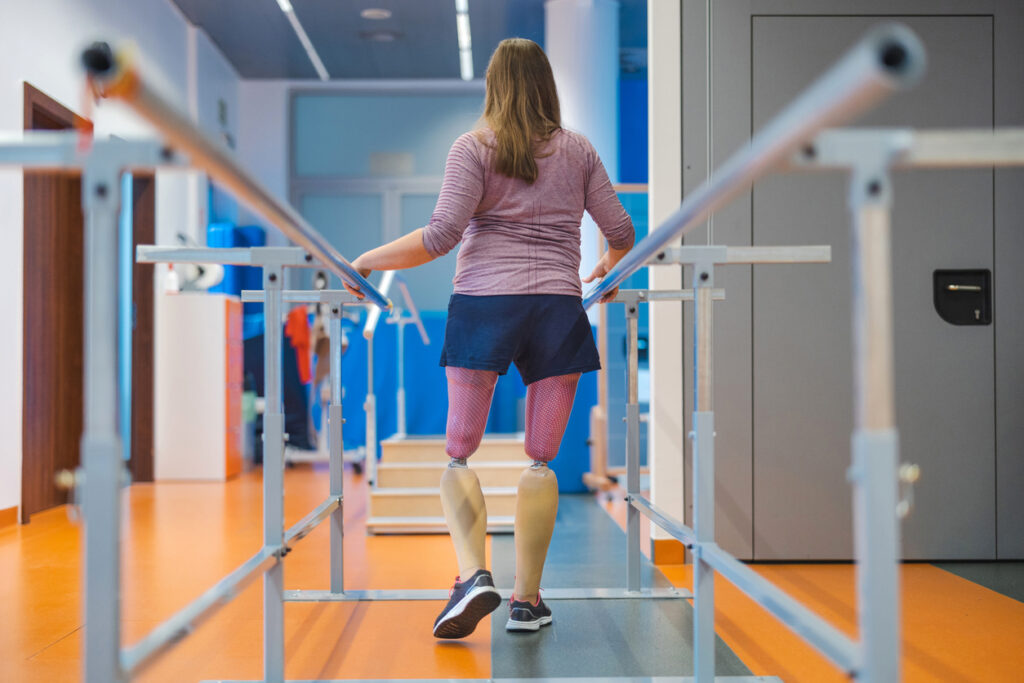
Employers and claims teams are often surprised by how long it takes to recover from a catastrophic injury. Wells walked through a general timeline for amputees, noting that every case is different.
| Phase | General timeframe | What’s happening |
| Healing and reconstruction | ~6 weeks (longer with complications) | Surgical stabilization, tissue grafts, delayed healing addressed |
| Prosthesis fitting | 6–8 weeks post-injury | Device design and fabrication based on patient goals |
| Proficiency training | ~4 months after fitting | Learning to trust and use the device for daily tasks |
Add it up, and you’re often looking at six months or more before someone is functioning with real confidence – and that’s not the end of the story.
Wells described prosthetic rehabilitation as a continuum. No single device can replicate everything a human hand does, so the goal of the first prosthesis is to cover most of a patient’s needs – about 65% of functional capacity, in Wells’ framing – and then reassess.
“The goalpost never stays stationary in my world,” Wells explained. As patients rehabilitate and their lives expand again, new needs surface. A second prosthesis, or a different configuration, often follows.
This isn’t a flaw in the process; it’s a sign that it’s working.
Early coordination changes outcomes
Wells has seen catastrophic injury cases go well and poorly. The difference, he said, almost always comes down to one thing: Communication.
When things go well, the injured worker feels supported from the start – not because anyone has all the answers, but because someone shows up. A nurse case manager gets assigned quickly. The employer stays in contact. The patient knows there’s someone advocating for them while their world has been turned upside down.
“A patient needs to know that there’s someone they can contact when they have questions,” Wells emphasized. “Someone working on their behalf to just handle things – dot the i’s, cross the t’s – while they’re going through this life-changing event.”
Wells said he makes a point of reaching out to patients early, before they’re ready for prosthetics, to avoid the experience of being handed off to a stranger when they’re already overwhelmed. Reducing that apprehension makes a difference.
When things don’t go well, it’s usually the same root cause: Someone who needs information isn’t getting it. The injured worker starts to harbor fears or resentment, and those feelings become barriers to recovery. Employers can face the same challenge – when they’re out of the loop on what’s happening and what to expect, that uncertainty creates problems of its own.
“Communication is really key,” Wells noted. “When that person, that injured worker, isn’t getting information – that’s when bad things can happen.”
📍 Read next: Work Comp Claims: How MEM Supports Employers
The claims team’s role
One of the more specific points Wells made: He wants claims teams and nurse case managers present during prosthetic evaluations – not just to review bills, but to understand what a device is designed to do.
“It’s not my expectation that case managers and claims teams understand prosthetics on an administrative level,” Wells explained. “But they should understand what this device would potentially look like for a patient, what it’s designed or intended to do, so it’s a little less abstract.”
When the claims team understands the reasoning behind a proposal (why a specific device, why a specific timeline, what it will enable the patient to do), there’s less friction. Approvals move faster. Questions get answered. The work comp team and the clinical team are working toward the same outcome instead of talking past each other.
“When that communication piece is wide open,” Wells added, “it’s a difference maker.”
Prosthetic care is a long-term commitment
One thing employers and claims teams should understand: This relationship doesn’t end when the device is fitted.
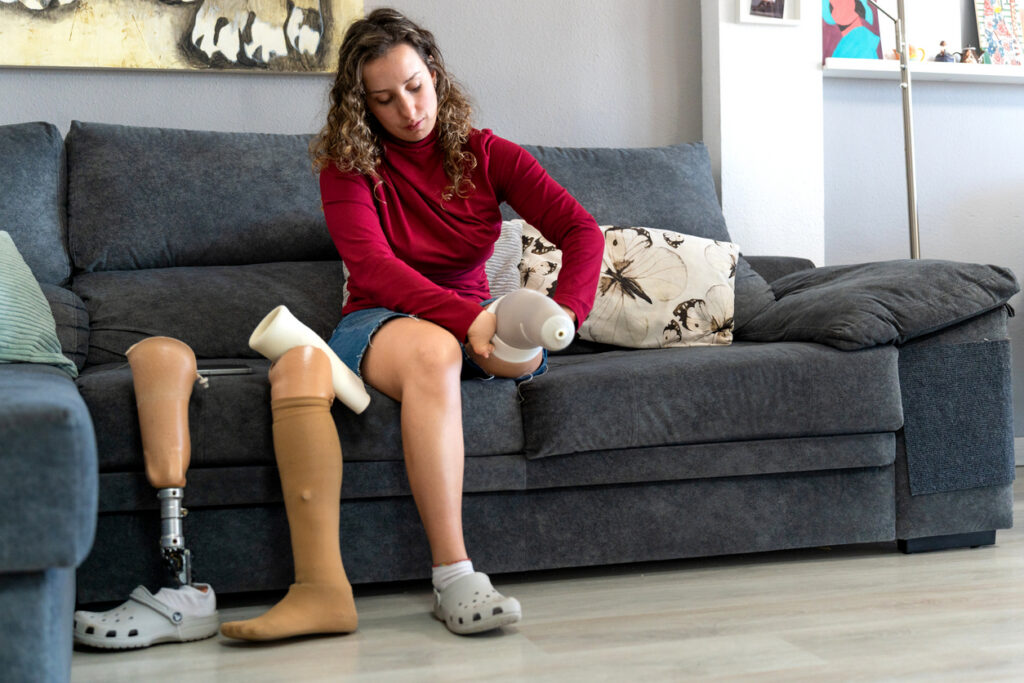
Wells checks in with stable patients about every six months – not because they ask, but because most injured workers are “a super resilient group” who want to get back to providing for their families and won’t always call when something needs attention. Repairs arise. Needs change. A broken prosthesis is, as Wells put it, like losing your only vehicle to get to work.
“It’s as or more important that patients are taken care of well after their device is fitted than when you just make the first device,” he observed.
For claims teams managing a catastrophic case, that means planning for a longer arc – and staying engaged through it.
How to prepare before a catastrophic loss
No employer wants to face a catastrophic injury. But preparation makes a real difference in how one gets handled if it happens.
- Know your claims team before you need them. If an injury occurs, the earlier your work comp carrier is looped in, the better. A nurse case manager assigned quickly is one of the strongest predictors of a well-coordinated outcome.
- Show up for the injured worker early. You don’t need all the answers. You need to make it clear that someone cares and is ready to support them through recovery.
- Understand that recovery is nonlinear. There will be phases, setbacks, reassessments, and new goals. Build that expectation into how you communicate with the employee and with the care team.
- Stay in the loop on the clinical side. Ask questions. Attend evaluations when appropriate. The more the whole team understands what’s happening and why, the fewer surprises there are.
More than a claim number
Catastrophic injury rehabilitation can be extremely complex – the timelines, the devices, the ongoing care. But Wells kept returning to something simpler.
“Connected to any claim, there’s a human, and that human is connected to many other humans – a spouse, or partner, or children. What they’ve gone through is more than just a claim number.”
He added: “I always tell people that I hate that I’ve met you this way. But I’m really glad to be here to help you now that you need me.”
That’s the standard of care catastrophic injuries deserve – and it’s what good coordination between employers, carriers, and clinical teams makes possible.
Be prepared for a workplace injury before it occurs. Download the MEM Claims Management Kit for a step-by-step guide to managing a claim from first report through resolution.
Frequently asked questions: Catastrophic injury recovery
What qualifies as a catastrophic workplace injury?
A catastrophic workplace injury is one that is life- or career-changing – typically involving the loss or severe damage of a limb, a traumatic brain injury, paralysis, or any injury that prevents an employee from returning to their previous work or significantly alters their daily life.
How long does it take to recover from an amputation?
Recovery from an amputation typically spans six months or more before an injured worker is functioning with real confidence. The process includes an initial healing and reconstruction phase (~6 weeks), prosthesis fitting (6-8 weeks post-injury), and proficiency training with the device (~4 months). Complications like delayed healing or tissue grafts can extend any phase.
What is a prosthetic continuum, and why does it matter for work comp claims?
Prosthetic rehabilitation is a continuum because no single device can replicate the full function of a human hand. The first prosthesis is designed to cover most of a patient’s functional needs, then reassessed as the patient rehabilitates and their goals evolve. For claims teams, this means a catastrophic case may involve multiple device requests over time. That’s expected and a sign that care is working, not a red flag.
What should an employer do immediately after a catastrophic workplace injury?
Contact your workers compensation carrier as soon as possible. Early assignment of a nurse case manager is one of the strongest predictors of a well-coordinated outcome. Separately, reach out to the injured worker directly – you don’t need all the answers, but making clear that someone is paying attention and working on their behalf reduces fear and supports recovery.
Why does communication between the claims team and the clinical team matter?
When claims teams understand the reasoning behind prosthetic proposals – why a specific device, what timeline is realistic – approvals move faster, and the injured worker gets care sooner. Prosthetics specialist Julian Wells recommends that nurse case managers and adjusters attend evaluations when possible, not just to review bills but to understand the care plan firsthand.
How long does a work comp carrier stay involved in a catastrophic claim?
Carrier involvement in a catastrophic claim extends well beyond the initial recovery. Prosthetic care requires ongoing maintenance and reassessment – repairs, adjustments, and potentially additional devices as the patient’s needs evolve. Claims teams should plan for a longer engagement arc and stay in contact with both the clinical team and the injured worker throughout.
Can an injured worker return to their previous job after an amputation?
It depends on the nature of the job and the level of functional recovery achieved through rehabilitation. Some injured workers do return to their previous roles with the support of a well-fitted prosthesis and occupational therapy. Others transition to modified duties or different positions. The goal of prosthetic rehabilitation is to restore as much function as possible across work, daily living, and recreation – return to the previous role is one outcome, but not the only measure of success.
What is a nurse case manager’s role in a catastrophic injury claim?
A nurse case manager serves as a coordinator between the injured worker, the clinical team, and the work comp carrier. In catastrophic cases, they help communicate what’s happening, why, and what comes next – reducing the uncertainty that can become a barrier to recovery. Having a case manager assigned quickly and staying actively engaged with the clinical team significantly improves outcomes.